


Post-Purchase Email Sequences That Turn One-Time Buyers into Loyalists

You spent $45 to acquire that customer. They bought your cleanser, it arrived on Tuesday, and now they're sitting with it wondering if they're using it right, whether it's actually working, and what else your brand makes. What happens in the first 21 days after a first purchase determines whether a customer buys again — and most skincare brands are radio-silent for the entire window.
In 2026, retention is the growth lever that separates DTC skincare brands with strong unit economics from brands that are perpetually acquisition-dependent. A customer who buys twice has a 45% chance of buying a third time. A customer who buys once and doesn't hear from you for a month has a 75% chance of never buying again. The post-purchase email sequence is the highest-leverage intervention you have — and it's almost entirely automated once built.
The Problem: Shipping Confirmations Aren't Email Marketing
Most brands have two automated post-purchase emails: the order confirmation and the shipping notification. Both are transactional. Neither builds a relationship, teaches the customer how to get the best results, introduces them to the brand's broader line, or creates the kind of ongoing connection that drives retention. Transactional emails average a 45–50% open rate because customers want to track their order. Brands that don't use that attention window to begin building loyalty are wasting their highest-open-rate touchpoint.
The other missed opportunity is review velocity. Brands that send a targeted review request within 7 days of delivery generate 3–4x more reviews than brands that send a generic "how did we do?" blast 30 days later. Review quantity and recency directly affect your conversion rate on the product page — making the post-purchase sequence a CRO tool, not just a retention tool.
Anatomy of a High-Performing Post-Purchase Sequence
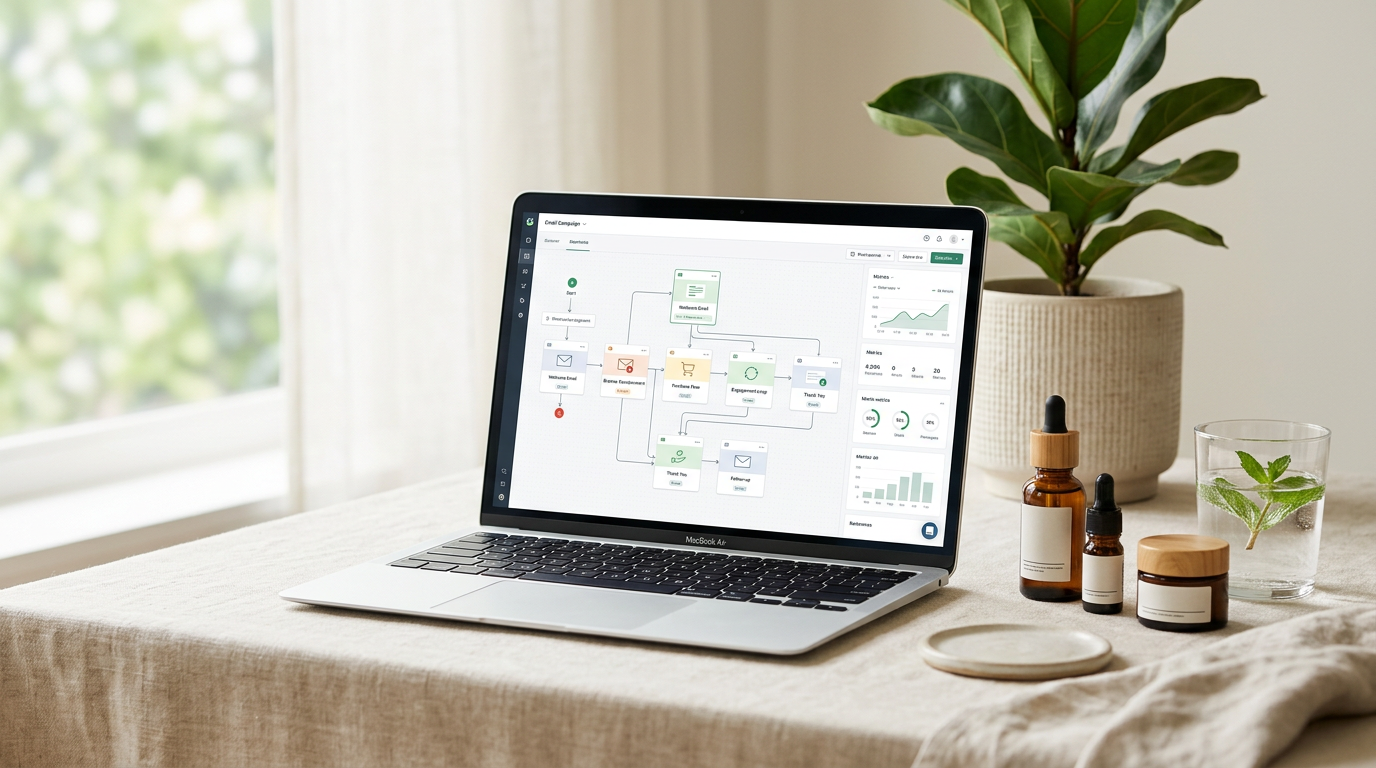
The sequence has six emails, spread across 21 days. Each email has a specific job. The sequence assumes the product has arrived by day 3 and that the customer is an active first-time buyer. Adjust timing based on your actual delivery windows and average replenishment cycle.
The 6-Email Post-Purchase Sequence That Works
1. Day 0 — Order Confirmation + Brand Welcome: The standard confirmation, but upgraded. Confirm the order, provide the tracking link, and add a 2-sentence brand welcome that connects the customer to the mission and tells them what to expect. Don't try to upsell yet — this email is about trust. Subject line format: "Your [Product Name] is on its way — here's what to expect." This email should achieve a 55–60% open rate if sent within 30 minutes of purchase.
2. Day 3 — How to Get the Best Results: Sent once the product has likely arrived. This is your education email: how to use the product correctly, what to expect in the first week vs. the first month, common mistakes to avoid, and what skin changes are normal vs. a reaction. This email reduces returns, reduces customer service contacts about results, and dramatically increases the probability of a positive outcome. Brands with a usage-guidance email see 30% lower return rates and 25% higher review scores.
3. Day 7 — Review Request: Ask for a review while the product is fresh in their hands and the purchase is recent. Keep it simple and direct — one click to leave a review, no lengthy survey. If they've had the product for a week and are using it correctly, they already have an opinion. This is your highest-yield review request — day 7 generates 3–4x more reviews per send than day 30. Incentivize with a small discount or loyalty points for completing the review.
4. Day 10 — Social Proof + Product Education: Introduce them to 2–3 customer stories or before/after results from customers with similar skin concerns. Then introduce one complementary product from your line — not a hard sell, but a recommendation framed as "customers who use [Product] also love [Companion Product] because [reason relevant to their skin type]." This is the first soft upsell in the sequence. This email generates 6–8% conversion on the recommended product when the recommendation is genuinely relevant and personalized by skin concern.
5. Day 14 — Routine Builder: Two weeks in, the customer is developing a habit. Now introduce the concept of a routine — how your product fits into a morning or evening regimen and what other products complete the routine. This email positions your brand as the source of their entire skincare stack, not just one product. Link to a quiz, a routine guide on your site, or a "shop the routine" collection. Customers who engage with a routine-builder email have 2x higher 90-day LTV than those who don't, because they adopt multiple products instead of one.
6. Day 21 — Loyalty and Subscription Invite: Three weeks in, the customer has formed an opinion. If they've used the product correctly, they've started to see early results. This is the moment to introduce your subscription program, loyalty scheme, or VIP tier. Frame it as an exclusive invitation for their loyalty, not a marketing push. Offer a meaningful incentive — 15–20% off their next order or free shipping. Day 21 subscription invites convert at 8–12% for brands with a replenishable core SKU — significantly higher than a cold subscription ask on a product page.
What to Build First
Start with emails 1, 2, and 3. They're the highest-impact and lowest-effort to write because they're product-specific and straightforward. Get those live in Klaviyo, triggered by purchase, and let them run for 30 days before adding the remaining emails. Then layer in 4, 5, and 6 in order. The full sequence will be live within 60 days and running on autopilot from there.
At Veilup, we build complete post-purchase email sequences for skincare brands — from architecture and copy to Klaviyo configuration and ongoing optimization. If your post-purchase experience stops at a shipping notification, the infrastructure to change that is already here.
More insights